Word-finding, working memory, mental fatigue, slowed processing — when bloodwork and imaging say nothing is wrong but you know something is.
VALIDATION
Brain fog is real. It is measurable. It is treatable.
Brain fog is not a medical diagnosis, which is why so many patients with it get dismissed. Labs come back normal. The MRI is clean. The recommendation is to sleep more, stress less, try CBT. Nothing changes.
What we measure on qEEG — the actual electrical patterns of your brain function — tells a different story. The cognitive complaints have a signal. The signal can be retrained.
WHAT IT IS
What brain fog actually is.
‘Brain fog’ is a layperson term for a cluster of cognitive complaints: word-finding difficulty, working memory lapses, mental fatigue, slowed processing speed, an inability to concentrate. It is reported across many conditions — post-concussion syndrome, Long COVID, perimenopause, ADHD, autoimmune disease, and primary cognitive decline. The underlying mechanism is often network-level dysregulation rather than structural disease.
HOW WE DIAGNOSE
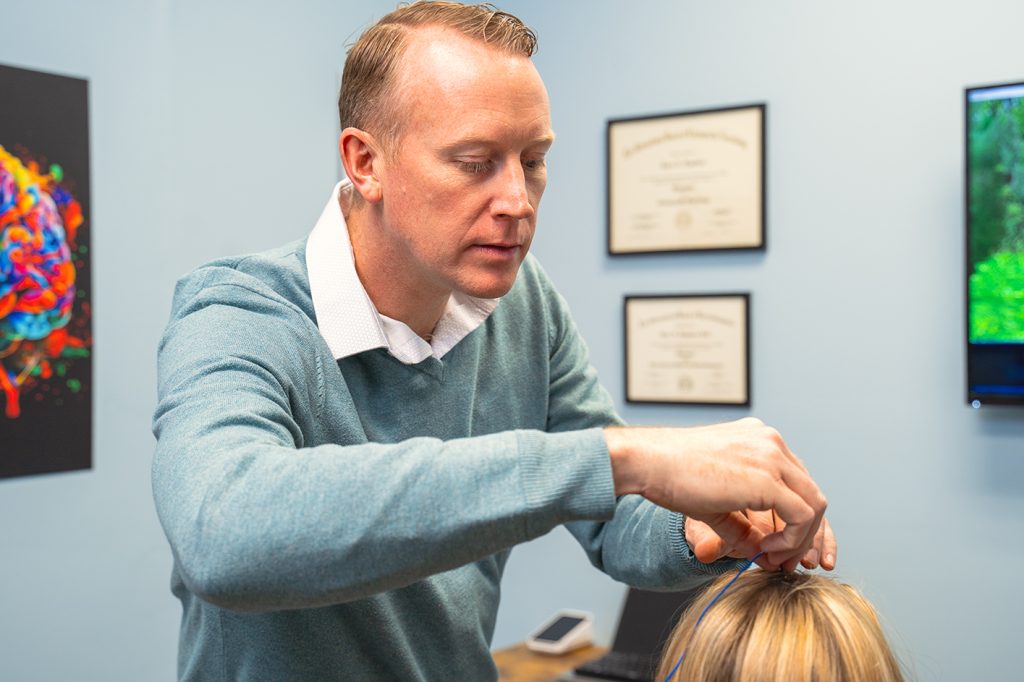
Starts with a qEEG brain map.
Brain fog assessment at Restorative Neuro begins with a qEEG brain map paired with cognitive screening (executive function, processing speed, working memory). We correlate the qEEG findings with your symptom timeline, prior workups, and any contributing context (post-concussion history, post-viral, hormonal, etc.).
You leave the first visit with a written plan that names the specific networks we are targeting and the modalities we will use.
OUR APPROACH
Restore the networks, restore the function.
Modalities selected from your specific qEEG findings. Sequenced by phase. Re-measured against your baseline.
A phased protocol, not a sequence of appointments.
Brain fog protocols typically run 12–20 sessions across 4–8 weeks. Re-measurement at the midpoint confirms whether the protocol is moving the data. If it is not, the plan changes.
Assessment
PHASE 01
Full intake, neurological exam, qEEG brain map. You leave with a written treatment plan and an honest assessment of whether this clinic is the right setting for your case.
Targeted Treatment
PHASE 02
Phased course of treatment from our modality stack, selected for your specific findings. Progress re-measured against your baseline at defined intervals.
Final Review
PHASE 03
Closing re-evaluation, written outcome summary delivered to you and your referring clinicians, and a home program calibrated to keep gains stable.