Dizziness, imbalance, visual motion intolerance, PPPD, vestibular migraine, MdDS — the symptoms the Epley maneuver did not resolve.
VALIDATION
There is no one dizziness doctor — until there is.
Vestibular patients are passed around. ENT, neurology, physical therapy, sometimes psychiatry. The Epley maneuver gets tried. Meclizine gets prescribed. The dizziness keeps finding you. The phrase ‘it might be anxiety’ eventually appears.
Dizziness lives between your eyes, ears, brain, and autonomic nervous system. We are built to test all four together — and to treat what they reveal.
WHAT IT IS
Vestibular disorders we treat.
The vestibular system coordinates your brain’s sense of head position, motion, and gravity. When any part of that system — inner ear, brainstem, oculomotor, cortical — is dysregulated, the result is some combination of vertigo, imbalance, visual motion intolerance, and exhaustion. Common diagnoses include benign paroxysmal positional vertigo (BPPV), persistent postural-perceptual dizziness (PPPD), vestibular migraine, mal de débarquement syndrome (MdDS), unilateral vestibular hypofunction, and post-concussion vestibular dysfunction.
HOW WE DIAGNOSE
Starts with a qEEG brain map.
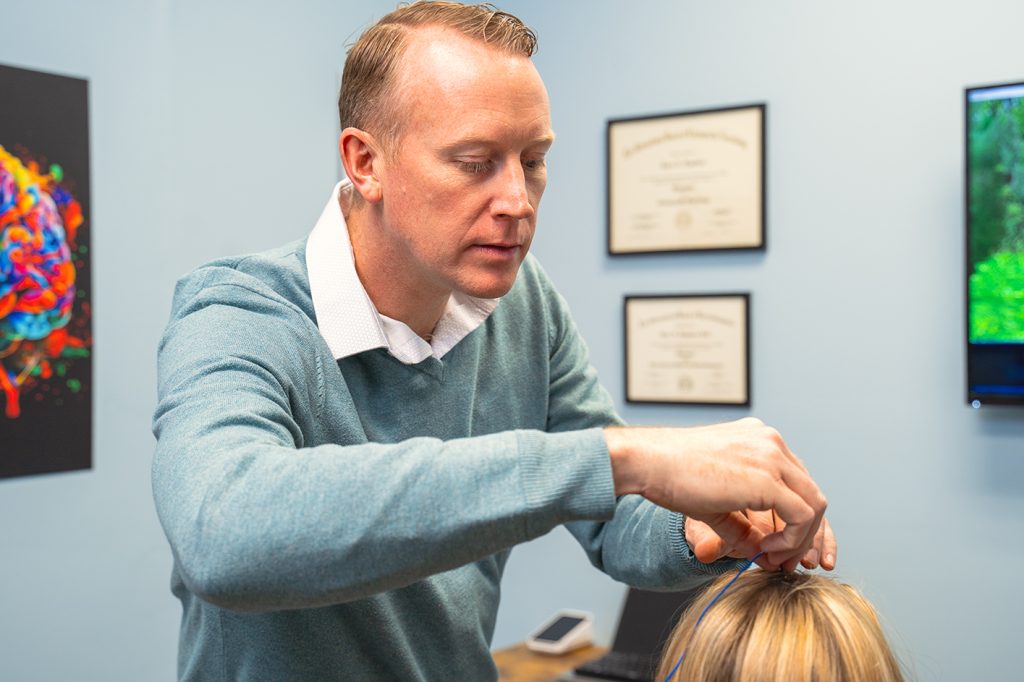
Vestibular assessment at Restorative Neuro combines a qEEG brain map, videonystagmography (eye-movement and gaze testing), computerized balance and posturography assessment (BTracks), and autonomic testing where indicated. We map which subsystem is contributing to your symptoms — central, peripheral, oculomotor, or autonomic — before treating.
OUR APPROACH
Customized vestibular rehab, not a generic exercise list.
Modalities selected from your specific qEEG findings. Sequenced by phase. Re-measured against your baseline.
A phased protocol, not a sequence of appointments.
Vestibular protocols are highly individualized. BPPV cases may resolve in 1–3 visits. PPPD and migraine variants typically run 12–20 sessions. Re-measurement against your initial posturography baseline is the objective marker.
Assessment
PHASE 01
Full intake, neurological exam, qEEG brain map. You leave with a written treatment plan and an honest assessment of whether this clinic is the right setting for your case.
Targeted Treatment
PHASE 02
Phased course of treatment from our modality stack, selected for your specific findings. Progress re-measured against your baseline at defined intervals.
Final Review
PHASE 03
Closing re-evaluation, written outcome summary delivered to you and your referring clinicians, and a home program calibrated to keep gains stable.